
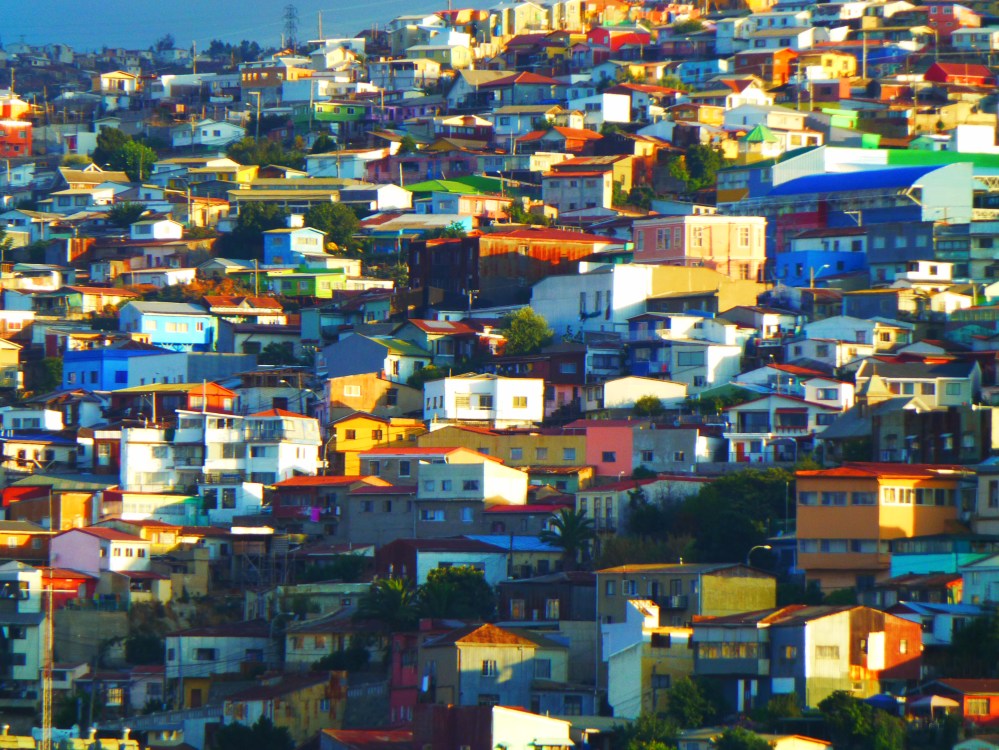
Our bus drive from Pucon was very smooth as we had no boarder crossing to contend with. Still exhausted from the Volcano ascent, we slept all the way and arrived early morning. Our hostel suggested that instead of an expensive taxi we seek-out bus 612 which, for about 30 pence each, would whizz us up into the hills (we quickly understood why this bus is nicknamed “the rollercoaster”) and leave us only a two-block walk from our hostel, Luna Sunrisa. Holding on tight, we were sped up into the surrounding hills, where we enjoyed some exceptional views of the vast, colourful city below us.


Listed as a top-choice in both guidebooks, Valparaiso was an immediate entry in our early draft itineraries. Described as a “ramshackle beauty”, we were keen to explore its many hills, famous ascensores (funiculars) and wander the labyrinth of atmospheric alleyways.
The city came into its own during the Californian Gold Rush, when it became the main hub for European ships crossing between the Atlantic and the Pacific. However, since the opening of the Panama Canal, trade here all but dried-up and the city started its sad decline from the grandeur of its former glories.


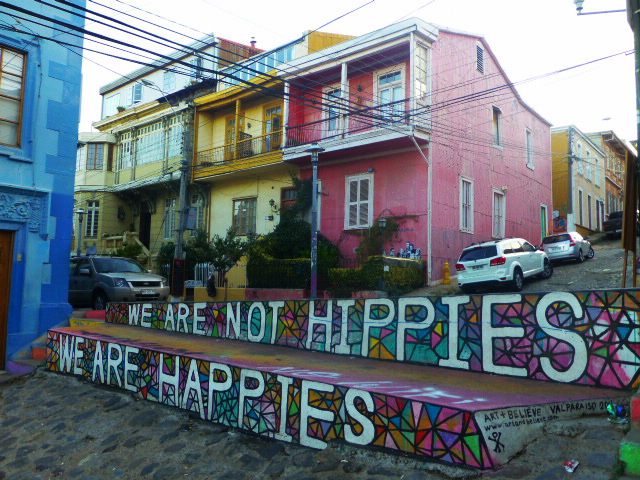
What remains is a UNESCO world heritage site, full of crumbling mansions (which the owners are forbidden from repairing), street art (graffiti in a lot of cases) and brightly coloured houses, which were constructed using the corrugated iron and tins of paint that had been used as ballast in the many ships that laid-anchor here.
Desperately in need of breakfast, we left the hotel to explore Calle Almirante Montt and its array of cafes and restaurants. One toasted ham and cheese sandwich and a couple of coffees later, we headed down the hill to the nearest metro station to catch a train to Portales, where our hostel hostess had told us we would find the fish market and several decent options for lunch.


We walked around the market, which was drawing to a close, since most of the fish had been sold. We found a man selling small tubs of delicious ceviche of salmon and reinetta (a local fish) for one “lucita” (slang for 1,000 pesos, so basically a pound). He was doing excellent business with the locals, so we bought a tub. It was delicious.


When we wandered outside, we found the water full of sea lions and seals, all feeding off the scraps being thrown overboard by the fishermen. The sky was filled with noisy seagulls, all looking to scavenge bits of fish from the sea lions. When one of them succeeded, it would then be chased by the other seagull, all trying to steal his prize. We spent a good hour observing the sea lions, seagulls, pelicans and the locals fishing off the pier.

As we sat by the sea we observed the many restaurants that were beginning to fill-up and set about determining which of them we should go to for lunch. We established a basic points system – locals would score highly – and after an hour or so, we had a clear favourite. Unfortunately, our strategy backfired, when, on approaching the restaurant, a tout offered us a free Pisco Sour if we had lunch there. Our mutual aversion to touts kicked-in and we found ourselves hurrying, somewhat flustered, away from our chosen restaurant to the place next door.


It needn’t have mattered; we ate like kings. We had a Chilean speciality machas a la parmesana. Literal translation is razor clams but they are not as thin as the razor clams we are used to. These were served in their shells and had been grilled with cream and parmesan – wonderful! Upon paying the bill the management insisted we have a shot each. One was green and one was yellow. They were both pretty disgusting but some enthusiastic grinning and the odd ‘muy bien’ got us out the door without upsetting the waitress.


The afternoon was spent discovering the city on a 3h city tour with a company called “Tour for Tips”. We gathered at the meeting point and the guides were easily recognizable thanks to their red and white striped “where’s Wally” t-shirts. We discovered “Cerro Allegre” and “Cerro Concepcion”, the two most famous hills of Valparaiso. We absolutely loved this very bohemian city.


The advantage of being an UNESCO world heritage site is that the buildings are protected. However, the other side of the story is that the uninhabitable, crumbling houses cannot be reconstructed, so in some parts of the city you come across some rather unsightly ruins where the owners are quite happy to patiently wait for the next big earthquake to do its job.


Having enjoyed Tours for Tips so much, the next day we got up early to catch the morning version of the tour, which covered some of the more edgy neighborhoods, the prison of Valparaiso and some of the street art (graffiti?).


Incidentally, we were on high-alert, since a Dutch couple from our hostel had had one of their bags stolen the previous day, in broad daylight, whilst seated at a café. His passport, money and phone all gone – shocker.


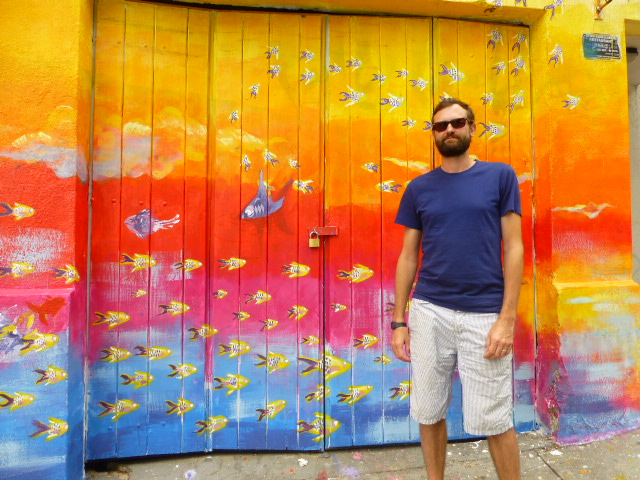
Valparaiso is considered as one of the street art capitals of the world. Apparently anything commissioned is called street art, yet everything else is graffiti. Ed’s more cynical view is that anything that looks bad is graffiti. It’s true that there are murals everywhere. Some are absolutely amazing, some not so much but you have things for all tastes.


Many people say that Valparaiso gets the artist out of anyone who walks around with a camera. And it’s true! We were not so lucky with the weather as the sky was quite clouded but we still managed to get some good snaps!


The rest of the afternoon was spent having a delicious lunch and, as luck would have it, enjoying a concert from a terrace we had stopped at to have an early evening drink or two.


On our last day, we decided to do a little excursion, so we headed to the bus terminal to catch a bus to Isla Negra, a seaside resort some 80km south of Valparaiso. Our goal was to visit Pablo Neruda’s house and then laze on the beach in the 30ish degree heat.
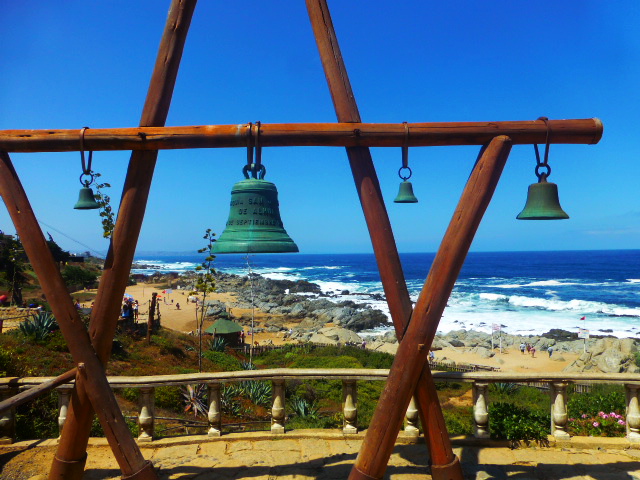
Pablo Neruda is one of Chile’s national treasures. He won a Nobel Prize for literature in 1971 and was well known for collecting all types of objects, including bottles, shells and ship figureheads (mostly women – he war married three times).


Equipped with audio devices, we thoroughly enjoyed running around his “favourite” house, exploring his many artifacts. He was a lover of the sea but was not a sailor (sounds familiar). He imagined himself as the captain of his seaside house, which had been permanently moored on the shore.


It was so hot and sunny that day that we opted for a big lunch instead of burning on the beach. We planted ourselves at a restaurant called Florencia and it proved to be a very good decision. We ate ostiones a la parmesana (scallops with more parmesan), fresh calamari and then lots of delicious white fish, all washed down with a bottle of Chilean white wine. Needless to say, we had no trouble sleeping on the bus drive back to Valpariaiso.


Still motivated to take advantage of our last hours in Valparaiso, we visited “La Sebastiana” which was Pablo Neruda’s house in Valparaiso. We then walked down the hill to see the Open Air Museum and enjoy more murals.
We picked up some sushi for the night bus, repacked our bags and headed to the bus station for what was going to be a far longer bus journey than we had anticipated…

Next stop: Mendoza and lots of wine!
Highlights:
- Valparaiso: such a cool city, we really loved it!
- The buzz of the fish market
- Lunch at Isla Negra – slow, lazy and delicious
Gastro highlights:
- Ceviche at the fish market – as fresh as it gets, how clever
- Machas y ostiones a la parmesana
 edandlolotravel