
So here I am, sipping a glass of Tannat red wine (prominent grape in Uruguay, originally from the South West of France) and nibbling on crisps while Ed is cooking diner in the (shared hostel) kitchen. Lucky me!
The boarder crossing with Uruguay was extremely smooth as all the passport controls occurred in the boat terminal. After a crossing that lasted a bit over an hour, we arrived in Colonia del Sacramento just before sunset and settled in to our hostel for the night.
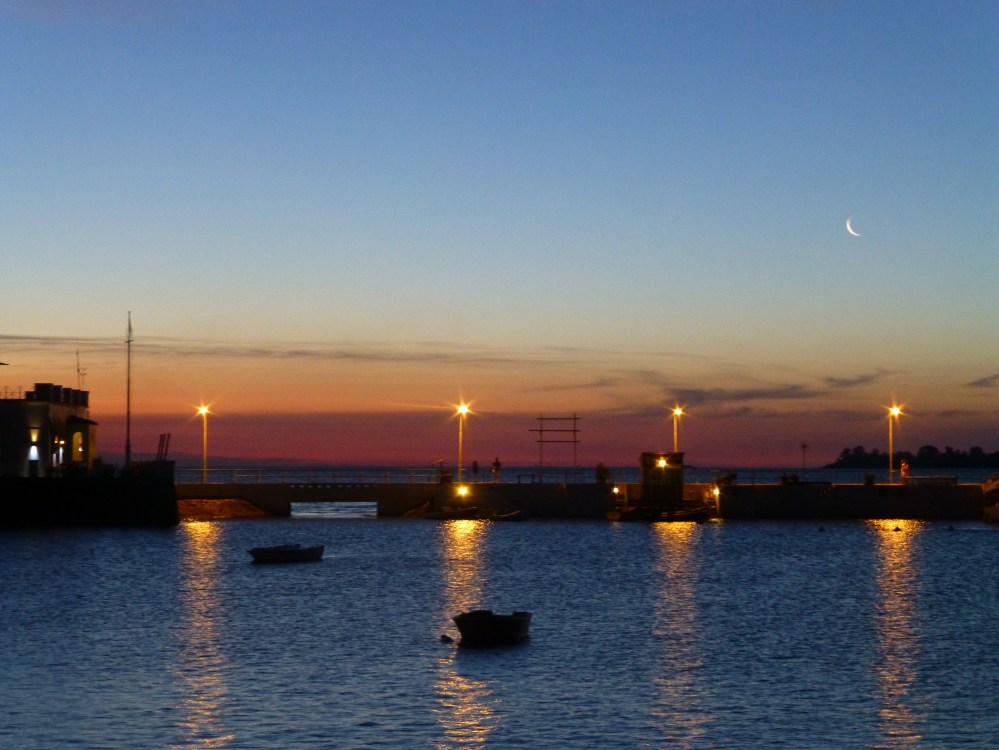
Colonia used to be a Portuguese and then Spanish colony and a popular place to smuggle goods into Argentina. We walked around at night and ended up eating in what was probably THE tourist trap of the small town. Alas, we had been blinded by the candles, the outside seating, the cool breeze and the atmosphere. The frozen food made us realize our mistake! Ed felt ashamed – we both learned some lessons…!
The next day, we started exploring and ended up joining a local tour, which was very interesting and explained the difference between Portuguese and Spanish architecture, with particular attention paid to the cobbles.


The most photographed street of the country is called “Calle de los Suspiros” (street of the sights), which gets its name from two legends; either it was the place where slaves that had not been sold were executed, or it had become a “hot” street and its name came from the sights of the prostitutes.


We really enjoyed walking around Colonia because you find old cars in every corner, which gives the town a lot of charm.


Our lunch was epic! Still shaking from our experience the night before, we decided to try our luck with a street stall and sample the local specialty called “chivito”. This is effectively a super-tuned steak sandwich, consisting of steak, ham, cheese, bacon, fried egg, tomato, salad and a range of additional salad options, including olives, onions, pickles, sweet corn etc… It was served in a small plastic bag (actually quite smart as all the delicious juice stays in the bag) and we enjoyed ours in the park. We could not have asked for more!


In the afternoon, we received our car and decided to explore the area before hitting the capital Montevideo. The route brought us a little North, where we discovered a winery called “Los Cerros de San Juan”.
We though it would be done and dusted in 30 minutes but ended up staying there more than two hours and making friends with the Brazilian families that were visiting at the same time.


The bodegas produce at least 8 different grape varieties and has many different labels but we learned that the “tannat” grape is definitely what Uruguay is known for. It was imported from France back in the days but none of us had ever heard of it. All we can tell you is that it goes down pretty well!


When the sun started to set, we headed for Montevideo and arrived much later than planned. We managed to navigate the outskirts of the city quite well and, despite no satnav, managed to arrive without too much trouble in the barrio de las Llamadas, where we had booked our Airbnb accommodation. Again, it was a great experience as the flat had a lot of charm and it was excellent value.


The next day, we set about exploring Montevideo. After a quick visit to the tourist office to get our hands on all the maps we would need for the trip, we were encouraged to hit the 22nd floor of the nearby public building to enjoy a panoramic view of Montevideo and its port.
So here are the facts about Uruguay, it is a rather small country with a population of 3.5 millions inhabitants and 1.3 live in Montevideo. This year, they expect to receive between 3.5 and 4 million tourists (mostly Argentine and Brazilians). It is not typically on the radar of backpackers since for some it is known as the Switzerland of Latin America – not for its mountains as the country highest points are three hills which barely reach 500m – and can be quite expensive, particularly in the fashionable beach resorts.


The main reason for our visit was because Laurence’s father and grand-mother were born and raised there, so we both wanted to check-out the country after hearing so many stories about it and its wonderful beaches.


We walked around the streets of the center of Montevideo and visited a few museums such as the Gaucho museum (the Latin version of Cow Boys), the Figari museum (amazing artist that produced a lot of paintings and had 9 kids) and then the Carnival museum. Carnival in Montevideo a pretty big deal but differs from those of Rio and Encarnacion because the carnivals are principally centered around stages, so for two months, various neighborhoods will host all sorts of performances, including singing, dancing and comedy.


We deliberately decided not to do the hop-on, hop-off tour to save a bit of cash. This was immediately invested in a delicious lunch at arguably the best place just off the Mercado del Puerto called “El Palenque”. It was worth every penny!


Later that afternoon, after getting lost in the streets of the center that look a bit like you are in the center of Habana, we met up with Tamara, an ex-colleague of Laurence while they worked at IE University. It was great to have Tamara’s tips on where to travel and what to do in terms of tipping or how to handle the people that mysteriously appear when you are parking or leaving your parking spot and expect a cash payment for looking after your car…


This is an interesting phenomenon, native to Latin America. All of a sudden, a person with a flashy jacket will appear, vaguely help you to park (they are not doing much but some do it in a very theatrical way) and “protect” your car while you are away, in exchange of a few coins. The one in charge of the street where our apartment was located in Montevideo was quite a character; Stephanie from Nicaragua, quite ostentatious, with lots of make up (and big cleavage). After speaking with her, we agreed that she was probably born as Stephano… our Airbnb host told her that she was definitely the biggest character of the neighborhood.


Our last night in Montevideo was spent at the apartment plotting our next move to the coast. We are literally travelling during the busiest period of the high season (summer holidays have just started), so finding somewhere to stay that won’t financially cripple us is quite challenging. So long as they are clean and conveniently located, youth hostels and their bunk beds are serving us very pretty well and provide an opportunity to meet more people along the way.

Next stop: Punta del Este and the beaches along the east coast…
Highlights:
- Colonia del Sacramento – the old town is very charming but do some restaurant research before heading out!
- The drive between Colonia and Montevideo as the sun was setting
- The panoramic view of Montevideo
Gastro Highlights:
- Our first (and certainly not our last!) Chivito
- The Mercado del Puerto and the restaurant “El Palenque”, certainly rivaled Maipu in BA as our favorite lunch to date.
 edandlolotravel